While stereographic (3-D) photography dates back nearly 200 years, it wasn’t until the introduction of Tru-Vue that the format became more streamlined and compact, as it utilized film rather than prints to create the stereo view. Throughout the 1940s and 1950s subjects were primarily scenes of a travel-related or educational nature, although other scenes based on popular comic strips and comic books were available too such as Blondie, Buck Rogers, and Captain Marvel. As they continued to add more subjects geared towards children, titles expanded to include Disney, Howdy Doody, Red Ryder, and other western subjects.

In 1950 Tru-View began producing color films for the first time, partly in response to Sawyer’s competing View-Master product, which had been in color since its 1938 introduction. The color process selected by Tru-Vue was Ansco, which at the time was more economical than Kodak and provided the needed color reproduction demanded by Ford Motor Company for its promotional film strips. However Ansco color is not very stable and most films turned magenta over the years, the exception sometimes being cartoon subjects.

Tru-Vue acquired its Disney license in 1950 and held it through 1956. At the time Tru-Vue was in the process of transitioning from black & white to color, so titles would sometimes appear in both formats.

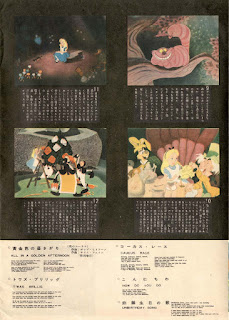
The Alice films were sold during the original release of the film in 1951, during not only the transition from black and white to color, but also from Tru-Vue’s Rock Island plant to Sawyer’s Beaverton plant. When one compares the product information contained in the Character Merchandise Division catalog with the actual products themselves, you can see the transition as the company is list in Rock Island in promotional material but Beaverton on product packaging. One can only imagine the the logistical nightmare of manufacturing, marketing, and selling Alice and all the other products during this time.

The black & white Film (B 51) was issued with the standard red and white box, the black and white film consists of ten scenes, down from the original 14 scenes in the pre-color days. The films are a little difficult to look at these days, as the intervening 70+ years tightly wound in their little boxes makes them act like watch springs, recoiling violently with the slightest misstep in handling them.

The color film (X 51) was issued in the standard red, yellow, and blue box, the color film consists of the standard nine scenes.
Both the black & white and color sets consist of the four sequentially numbered Disney films: Alice in Wonderland (51), Bambi (52), Donald Duck (53), and Mickey Mouse (54) in an illustrated box featuring Donald Duck holding a Tru-Vue viewer.